I had a chat a while back with Al Golin about CSR or Corporate Social Responsibility, while he was in Singapore to celebrate his firm’s 50th anniversary.
Al’s the chairman and founder of GolinHarris and also the man who developed the concept of corporations having a ‘TrustBank’ – in a nutshell, this involves corporations doing ‘good work’ (and being seen to have done it) on a regular basis so that if ever the company gets involved in a sticky situation and the s*** hits the fan, you can mitigate the crisis by drawing from the bank of ‘good work’ you’ve done before.
I mean the philanthropy you see Bill Gates doing all the time seems well and good, but during my conversation with Al, I couldn’t resist asking him that really, aren’t these corporations carrying out CSR activities to contribute to a fatter bottom line, and not because they genuinely want to do it or sincerely think it’s good? In short, isn’t CSR for corporations a means to an end? Besides, even Al said CSR can act as a ‘tie breaker’ of sorts for companies – if they project an image of being trustworthy and reliable, more people would do business with them as they would rather deal with companies that they know, trust and admire than one that’s unknown.
Al didn’t miss a beat in his reply. He said, “Well, maybe it’s a bit of both, maybe it’s not all bad. Even if their motives are not as pure as it should be and they’re thinking of it from a business point of view, at least they’re doing something about it and getting it done. When you see Bill Gates and Warren Buffet give all this money to philanthropy, a cynic would say, well they’ve got all the money in the world, of course they’re going to give some of it away. Ok, it’s true, but at least they’re doing something about it, and something good is happening as a result of it. If they’re getting a good rub-off to their companies then why not? So I don’t think it’s a negative thing. If society is benefiting from it then it’s good.”
What do you think? Is CSR just a hypocritical myth for a shot at smiling for the cameras, or is there good underneath it all?
Monday, October 23, 2006


Thursday, October 19, 2006
Trade messages on mainstream media… what the?
We’ve discussed how ad agencies don’t prefer advertising themselves but what about award shows advertising on mainstream media… I wonder why that happens.
An example is tonight’s Hall of Fame Awards which was advertised as a banner ad on soccernet.com, and on two walls at Raffles Link – our most celebrated creatives pose for the camera, representing the newly introduced creative director’s award for the HOF 2006.

Another example was the Singapore Media Awards which was advertised on radio and more.
The only people who are interested in award shows are agencies, who then rope in their clients for a “great night at a great table, with great company”, according to one of our blog watchers, thc. Thanks for your comments by the way.
Which is fair. I think award shows are great opportunities to reward creativity and having all your peers gathered together for a few evenings in a year is great. I, for one, love the atmosphere.
So why then, would running an ad on Class 95FM, for example, be of any use? Surely organisers can simply send an email to all the agencies in Singapore. There are only 300 plus of them and if that’s too many, then the usual suspects who are active at award shows are easy enough to identify and target.
One obvious reason why such ads appear on mainstream media is because parties such as SMRT Media are supporters of the award shows and it’s part of their partnership agreement to offer up some free ad space.
But I’m thinking, SMRT Media is a commercial organisation and it can make good money out of the space it’s giving away. I’m all for showing support of a worthy cause, but the support has to mean something.
I think it’s great SMRT Media is providing a platform for people our industry respect, such as Tay Guan Hin, Rob Gax, Ng Tian It etc., to come out from behind the scenes to be acknowledged for the work they do. But I don’t believe these names mean anything to the average MRT commuter, and he/she definitely won’t buy a table at the next award show.
My point is, trade messages in mainstream media does not make sense and there our media planners should know this much better than me.
I’m happy to be corrected on this.
An example is tonight’s Hall of Fame Awards which was advertised as a banner ad on soccernet.com, and on two walls at Raffles Link – our most celebrated creatives pose for the camera, representing the newly introduced creative director’s award for the HOF 2006.
Another example was the Singapore Media Awards which was advertised on radio and more.
The only people who are interested in award shows are agencies, who then rope in their clients for a “great night at a great table, with great company”, according to one of our blog watchers, thc. Thanks for your comments by the way.
Which is fair. I think award shows are great opportunities to reward creativity and having all your peers gathered together for a few evenings in a year is great. I, for one, love the atmosphere.
So why then, would running an ad on Class 95FM, for example, be of any use? Surely organisers can simply send an email to all the agencies in Singapore. There are only 300 plus of them and if that’s too many, then the usual suspects who are active at award shows are easy enough to identify and target.
One obvious reason why such ads appear on mainstream media is because parties such as SMRT Media are supporters of the award shows and it’s part of their partnership agreement to offer up some free ad space.
But I’m thinking, SMRT Media is a commercial organisation and it can make good money out of the space it’s giving away. I’m all for showing support of a worthy cause, but the support has to mean something.
I think it’s great SMRT Media is providing a platform for people our industry respect, such as Tay Guan Hin, Rob Gax, Ng Tian It etc., to come out from behind the scenes to be acknowledged for the work they do. But I don’t believe these names mean anything to the average MRT commuter, and he/she definitely won’t buy a table at the next award show.
My point is, trade messages in mainstream media does not make sense and there our media planners should know this much better than me.
I’m happy to be corrected on this.
Tuesday, October 17, 2006
High5: spot the difference?
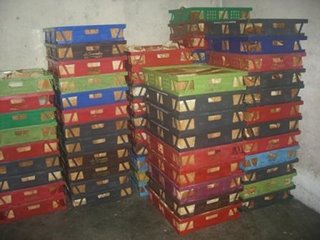
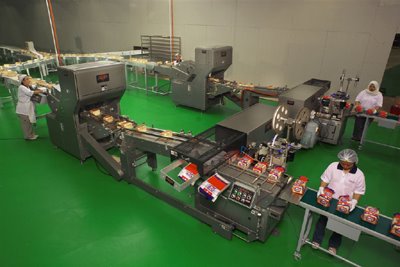
Let’s play a game of spot the difference -- High5 has moved to clear things up following the accusations of unsanitary and non-Halal bread practices. I've got the low down on this complete with images. Let the game begin.
IMSG has kindly provided me with the 'real' images of the High5 plant in Malaysia. I've also included the 'fake' images, so you guys can comment on what you think is real and what you think is fake or is it all fake?
Here we go...





One last picture for you guys, its a certificate stating High5 bread to be Halal.

Enough said from me, now its your turn to do the talking.
IMSG has kindly provided me with the 'real' images of the High5 plant in Malaysia. I've also included the 'fake' images, so you guys can comment on what you think is real and what you think is fake or is it all fake?
Here we go...




One last picture for you guys, its a certificate stating High5 bread to be Halal.

Enough said from me, now its your turn to do the talking.
Monday, October 16, 2006
Advertising agencies are hypocrites
Did the above statement get your attention, because it sure got mine when my colleague Dawn told me an ad agency boss in Singapore said it.
Dawn told me what he said months ago but the topic came up again recently while we were having tea with Eye Corp’s Raju Bahkta.
Let us ask this: how many ads for advertising agencies have you seen in the past six months? None?
We discussed how many agencies refuse to buy advertising, even though they make a business out of telling their clients advertising is good.
Some reasons (excuses) for not advertising include: no budget, no artwork, no time.
Could a reason for the lack of budget be because agencies spend everything submitting award entries, and then buy a gazillion tables at such shows?
Maybe the lack of artwork is a better excuse. I guess if I were a creative person I’d never be able to create something that represents me perfectly enough.
No time is just a cute one.
I respect that one honest soul who said his is a hypocritical business.
But I’m sure some other agency practitioners do not agree with the statement.
I’d like to hear what you have to say.
Dawn told me what he said months ago but the topic came up again recently while we were having tea with Eye Corp’s Raju Bahkta.
Let us ask this: how many ads for advertising agencies have you seen in the past six months? None?
We discussed how many agencies refuse to buy advertising, even though they make a business out of telling their clients advertising is good.
Some reasons (excuses) for not advertising include: no budget, no artwork, no time.
Could a reason for the lack of budget be because agencies spend everything submitting award entries, and then buy a gazillion tables at such shows?
Maybe the lack of artwork is a better excuse. I guess if I were a creative person I’d never be able to create something that represents me perfectly enough.
No time is just a cute one.
I respect that one honest soul who said his is a hypocritical business.
But I’m sure some other agency practitioners do not agree with the statement.
I’d like to hear what you have to say.
Thursday, October 12, 2006
Genius behind iPod ad comes out of the shadows
If you still don’t know who created that iconic iPod silhouette campaign that has become one of the most successful global campaigns ever, then you haven’t been reading our blog.

Subscribe to:
Posts (Atom)


